
I haven’t been everywhere, but it’s on my list.
~Helen Sontag
In 63 days (as of this writing), I’ll be in Rome again, so I’m still in the midst of getting ready for this mammoth trip (85 days in country). There is so much going through my mind right now that I’m having a hard time sleeping. Questions (Did I make reservations for the train from Orvieto to Firenze? and Does our hotel in Milano include breakfast?) and thoughts (I need to look at Samsonite luggage and I need to remember to have enough medicines for 85 days) float in and out of my brain almost constantly.
Mostly, though, I worry about the places on the itineraries where I’ve never been. I don’t usually take people to towns I haven’t visited, but this year is a bit different because we’re visiting the ancestral homes of some of my guests. I’m getting ready by reading what I can and studying maps of the towns so I’m not completely lost. Here’s a little bit of what I’ve learned.
Colobraro

Known as “the town without a name,” Colobraro is located in Basilicata on the arch of Italy’s boot. The town has long been cursed. In the 1940s, though, an incident secured the town’s negative reputation: Some say it was a lawyer and others say it was the then-mayor, but one said if her were not telling the truth, the room’s chandelier should fall….and it did right at that moment. Residents of neighboring towns began saying women of Colobraro were witches and exclaimed that saying the town’s name would bring bad luck. Since the 1940-50s, nearby residents have called Colobraro, ”that town” (chillu paese in dialect) and knocked wood if they have to name it. Chillu paese is particularly popular in summer when the residents, building on their sinister reputation, hold plays, festivals, and other activities celebrating misfortune.
Cuneo
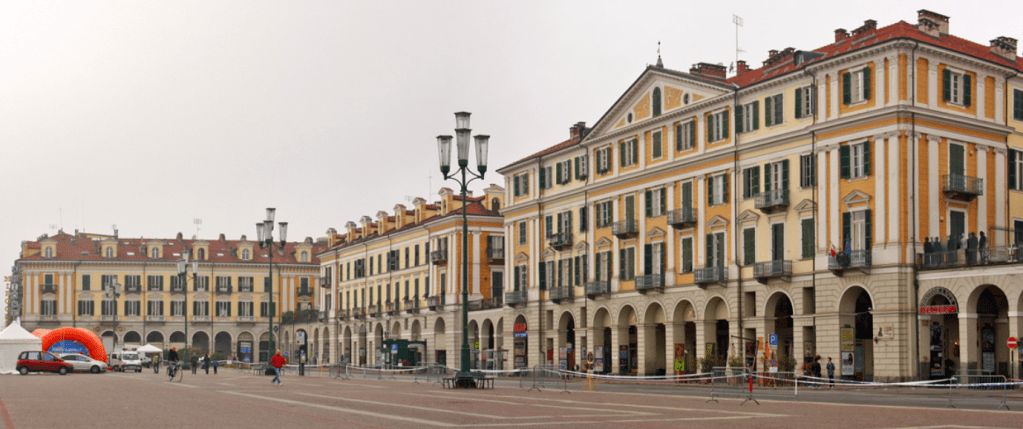
Cuneo, translated from Italian, means “wedge.” This town’s name, therefore, refers to the shape of the plateau on which the town sits. Located near the Alps, Cueno is south of Torino and was a vital town in the route between France and Rome. The Piemonte region, in which Cuneo sits, was actually a stronghold of the Savoy Dynasty (Savoia, in Italian) and marked the border between France and Italy. Cuneo’s architecture reflects its Savoy history. During World War II, Cuneo was a hotbed of resistance although the German occupation almost eradicated the town’s Jewish population. The area surrounding Cuneo features rolling hills dotted with small towns, and vineyards whose grapes make the Barolo and Barbaresco wines.
Maccagno
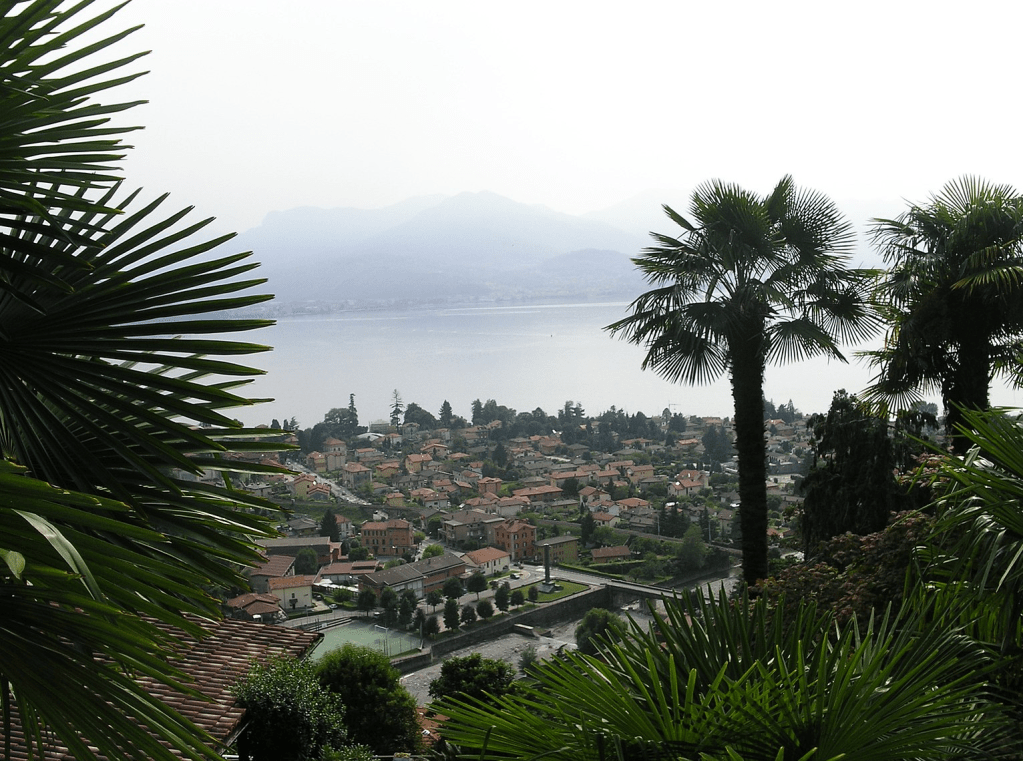
Also located in northern Italy is Maccagno (mah-CAHN-yo) which sits on Lake Maggiore’s eastern shore. Close to Italy’s border with Switzerland, the town is famous for its outdoor activities. In fact, the Club Alpino Italiano hosts rock climbing events on a cliff very close to the town center. Water sports are very popular, and Maccagno’s position on the lake make it perfect for windsurfing, sailing, and paddleboarding. Like other towns in Italy, Maccagno has an upper and lower town. In this case, the upper town is the more modern and administrative home of Maccagno. The rather new multifunctional building up there is where they hold most of the town’s celebrations and events, including carnevale where the center of attention is risotto con luganega (risotto with sausage).
Montella

Montella, Campania, is roughly 55 miles east and a little south of Naples in the Picentini Mountains Regional Park. As one might imagine, the area is replete with woods, streams, seasonal lakes, waterfalls, and trails. Chestnuts are a main product of the area, and Montella holds an annual festival celebrating the large nuts. Legend has it that St. Francis and some of his friars arrived in Montella sometime in the winter of 1221-1222, and the feudal lord refused to house them for the night. The saint and his friars settled under an oak tree, and when snow fell that night, it fell everywhere but on the men. St. Francis founded the Convent of San Francesco a Folloni there, and the oak became a relic under the altar.
Fun Fact: UConn Women’s BB Coach Gino Auriemma was born in Montella in 1954.
Next: The Emotional Baggage of Luggage

 coldpastaandredwine.com
👍👍
Sent from my iPhone
<
div dir=”ltr”>
<
blockquote type=”cite”>
LikeLike
I wrote about Colobraro in my book (52 Things To See and Do in Basilicata). 😁
LikeLike